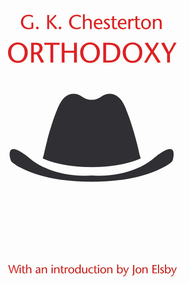
Orthodoxy, by G. K. Chesterton
G. K. Chesterton wrote of Orthodoxy that it represented an attempt ‘to state the philosophy in which I have come to believe’ and to do so ‘in a vague and personal way, in a set of mental pictures rather than in a series of deductions’. For most of its readers, it is the wittiest and most rollicking defence of the Christian faith ever written. With an introduction by Jon Elsby.
Click here for more details and discount purchase options.
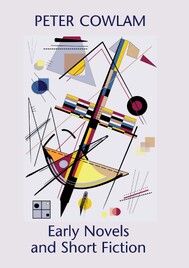
Early Novels and Short Fiction (hbk), by Peter Cowlam
Early Novels and Short Fiction (hardback version) is the first of three volumes covering Peter Cowlam’s adventures into fiction, from the mid-1970s to the early years of the twenty-first century.
Click here for more details and discount purchase options.
Early Novels and Short Fiction (pbk), by Peter Cowlam
Early Novels and Short Fiction (paperback version) is the first of three volumes covering Peter Cowlam’s adventures into fiction, from the mid-1970s to the early years of the twenty-first century.
Click here for more details and discount purchase options.
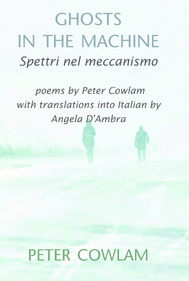
Ghosts in the Machine (hbk), by Peter Cowlam
A collection of finely crafted short-form poems, marked out for their candour and observational precision. The book is published in hardback as a CentreHouse Press parallel text, with Angela D’Ambra’s translations into Italian alongside the original poems in English.
‘Peter Cowlam’s bi-lingual English-Italian collection of poetry, Ghosts in the Machine | Spettri nel meccanismo, is a finely wrought act of introspective minimalism. Structured predominantly as short-lined couplets, they range from imagistic meditations to intellectual and physical explorations.' Sudeep Sen, Tagore prize-winner.
Click here for more details and discount purchase options.
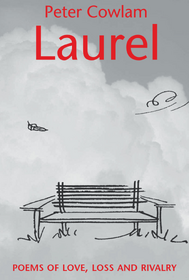
Laurel, by Peter Cowlam
A sequence of poems whose terrain is love, loss and lovers' rivalries.
His poems have an epic feel , painting vivid pictures with the fewest words possible. This new collection gathers together threads of irony, self-deprecating nostalgia, and linguistic playfulness in one powerful skein of sharp, imagistic one-liners.
Jane Holland, author of Disreputable
His spare poems brilliantly unfold an inner landscape on a complex journey of the heart that feels both personal and universal. Rachel Blum, author of The Doctor of Flowers
I am reminded of T. E. Hulme's imagist poems I discovered as a teenager through Herbert Read's The True Voice of Feeling. Laurel is a distillation of mood, atmosphere, feeling, expressed in a direct and surprising way, with the infinite, sky, sea, moon, sun, brought close to us and homely. Garry OConnor, author of The Vagabond Lover
Click here for more details and discount purchase options.
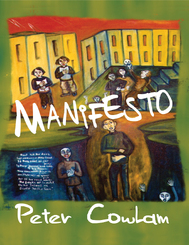
Manifesto, by Peter Cowlam
Manifesto is a sequence of haikuesque poems, aimed as a counter-blast at the political and financial institutions complicit in our master-slave society, wage slaves exhorted to fund a debt economy, and by that heavy price remain obedient citizens. As a narrative it charts, in its own fragmented way, a programme of resistance drawn up by a group of cyberspace guerrillas, whose agenda is the reversal of institutional propaganda put out as a daily drip-feed by press and other media.
Click here for more details and discount purchase options.
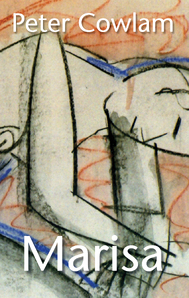
Marisa, by Peter Cowlam
The 1970s. Bruce takes over a financial consultancy firm founded by his father, while student Marisa inherits property. Love, lust and money drive them both, until their relationship begins to fall apart. Bruce's commitment is to the world of commerce. Marisa sets off in quest of social and political justice. Twenty-five years after an intense and bad-tempered affair, a chance entry in one of Bruce's business listings shows that Marisa is now boss of the Rae Agency a media PR concern. Bruce, as he recollects their partnership, is torn between his staid if harmonious family life, and renewing contact with Marisa. Finally, he commits to a course of action, but must face the truth of not having grasped the widening cultural and social separation their two different views of the world have wrought over the intervening quarter century.
Click here for more details and discount purchase options.
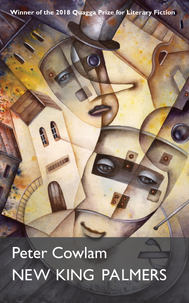
New King Palmers, by Peter Cowlam
Set in the late 1990s, in the months up to and after the death of Princess Diana, New King Palmers is narrated by its principal character Humfrey Joel, a close friend of Earl Eliot d'Oc. The earl's ancestry is bound up with the Habsburgs and the Austro-Hungarian Empire. D'Oc is a member of the British Privy Council and a close friend of Prince Charles (now King) and Princess Diana. In the months preceding Diana's death, he commissions a young theatre professional to develop a play. The play's theme is constitutional issues surrounding Prince Charles, with the heir's interests served by UK withdrawal from the EU, before it becomes a federal superstate. The commissioned play is called New King Palmers, and d'Oc maintains rigorous editorial control over it. When d'Oc's death shortly follows Diana's, Joel is named as d'Oc's literary executor, with the task of bringing the play to the English stage. Supposedly written into the text is an encoded message from the British Privy Council on behalf of the House of Windsor, addressed to the stewards of the EU. When news of this leaks out no one in the British literary and theatrical worlds believes it. In fact most come to see Earl d'Oc as an invented character behind which Joel shields himself, when his own motives are themselves sinister. So sinister, an MI5 spook is put on the case.New King Palmers won the 2018 Quagga Prize for Literary Fiction.
Click here for more details and discount purchase options.
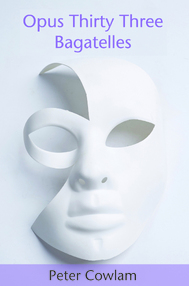
Opus Thirty Three Bagatelles, by Peter Cowlam
Opus Thirty Three Bagatelles is a collection of finely crafted haikuesque poems, marked out for their candour and observational precision.
I am reminded of T. E. Hulme's imagist poems I discovered as a teenager through Herbert Read's The True Voice of Feeling. These poems are a distillation of mood, atmosphere, feeling, expressed in a direct and surprising way. Garry OConnor, author of Ian McKellen: The Biography
I relish these sharply observed, finely concentrated moments of insight and wit. Catherine Belsey, author of Critical Practice
Poems sharp in definition, concise, deceptively simple and allusive. Eliza Granville, author of Gretel and the Dark
Click here for more details and discount purchase options.
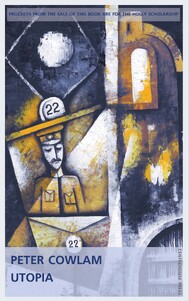
Utopia, by Peter Cowlam
Utopia follows the fortunes of Zora Murillo, who escapes the clutches of a military junta, and landing in a small English market town buys and renovates the Pleiades, a rundown hotel. The Pleiades is soon transformed into a living cabaret act and hotbed of political activism. Soon the locals want to know the source of Zora's unfathomable wealth, yet only one of them knows her back story, which is of espionage, the sinister deployment of AI and robotics, and a life-and-death political struggle for her and her father.
Click here for more details and discount purchase options.
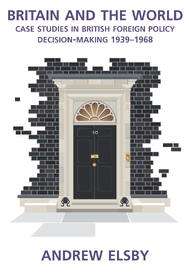
Britain and the World: Case Studies in British Foreign Policy Decision-Making 1939-1968, by Andrew Elsby
Britain and the World: Case Studies in British Foreign Policy Decision-Making 1939-1968 traces a period of relative British decline in economic, military, political and diplomatic power and the policies with which successive British governments reacted to it. The book assesses the different causal influences on the decision-making process, including the objective economic, political and military context and the attitudes, perceptions, personalities and relationships of those involved in British political and official establishment foreign-policy decision-making. Addressed are the negotiations for an Anglo-Soviet alliance in the spring and summer of 1939, the Soviet demand in late 1941 and early 1942 for recognition of their annexation of the Baltics, the post-war future of Germany, the Berlin crisis of 1948-49, the Suez crisis of 1956, and a comparison between British policy over the Korean War between 1950 and 1953, and British policy in the Vietnam War between 1964 and 1968.
Click here for more details and discount purchase options.
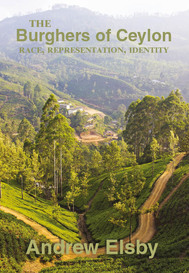
The Burghers of Ceylon: Race, Representation, Identity, by Andrew Elsby
The Burghers of Ceylon traces the origins and history of the mixed-race populations of imperial Ceylon. It explains how, and why, those populations emerged, how they developed, how they were distinguished – and how they distinguished themselves – from the Europeans and from the native populations. It explores the components of burgher identity. The author also provides answers to the following questions. How reliable is the evidence of the Dutch Burgher Union’s genealogies? How prevalent is racial misrepresentation, and what were the motives behind it? How were the mixed-race populations treated by the European colonial powers? What happened to those mixed-race populations when colonial rule ended in 1948?
The author’s interest in the burghers of Ceylon came about after his mother’s death, when he discovered she was from a Dutch burgher family in Ceylon. Her mother was half English and half native, and her father, Raoul Frank, was a Dutch burgher descended from a long line of German, French, Dutch, Belgian and British European male ancestors, with native or mixed-race female ancestors from the Dutch and British periods in Ceylon.
Click here for more details and discount purchase options.
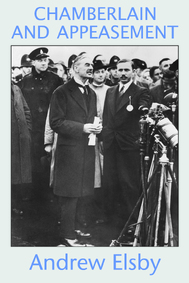
Chamberlain and Appeasement, by Andrew Elsby
Neville Chamberlain was Prime Minister of the United Kingdom from May 1937 to May 1940, and is identified with the policy of appeasement towards Adolf Hitler's Germany in the period preceding World War II. In this new study Dr Andrew Elsby assesses the different explanations of appeasement, taking into account evidence as to its causes. He rejects the revisionist case, and develops a counter-revisionism, establishing a more comprehensive assessment of the causes of British foreign policy during the period, using minutes of Foreign Policy Committee and Cabinet meetings, Chamberlain's personal papers, and in addition literature on the theory of foreign-policy decision-making apropos of the British political system. Stress is laid on the effect of attitudinal and motivational factors and individual influence, not least that of the Prime Minister himself. Conclusions reached by this new study are timely, and are of relevance now, vis-à-vis the UK and its relationship with Europe.
Click here for more details and discount purchase options.
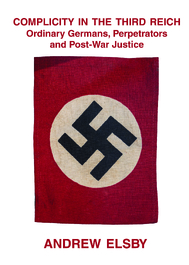
Complicity in the Third Reich (hbk), by Andrew Elsby
Complicity in the Third Reich is a trilogy, whose component books are: Ordinary Germans; Eichmann: Explaining Perpetrator Behaviour; and Post-War Justice For Nazi War Criminals: Context, Culpability and Legitimacy. Together the three books examine multiple levels of German complicity in the objectives and activities of the Nazi regime. The whole is an attempt to establish the nature and extent of complicity of ordinary Germans in their differing roles, and to show a parallel between their behaviour in the Third Reich and human behaviour in all cultures, societies and historical periods. The argument presented is that the decisive factor in the behaviour of both ordinary Germans and Nazi perpetrators is pursuit of personal interest. It is further posited that the optimisation of personal outcomes is the decisive causal influence on all human behaviour, regardless of culture, society and epoch.
Click here for more details and discount purchase options.
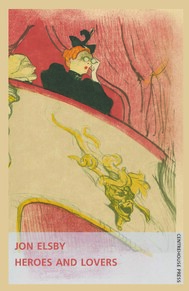
Heroes and Lovers, by Jon Elsby
What is a tenor? What makes some tenors great? Why are tenors so rare? Heroes and Lovers suggests answers to these questions and offers critical essays on twenty-six tenors and shorter assessments of thirty-four others. The tenors covered range from Francesco Tamagno, the first Otello, and Fernando de Lucia, both of whom recorded in the early years of the twentieth century, to Joseph Calleja and Rolando Villazón today. The book also comprises an introductory essay and separate essays on the early tenors of the recorded era, the popular tenors, the British tenors, and the specialist categories of Mozart tenors and Heldentenors. This is a personal selection and it will please, stimulate, provoke, and infuriate in equal measure.
Click here for more details and discount purchase options.
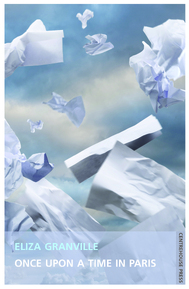
Once Upon a Time in Paris, by Eliza Granville
Like her last novel, Gretel and the Dark, Once Upon a Time in Paris cleverly combines a fairy-tale element with magic realism: in this case, an account of events in the life of Charles Perrault. Set in Paris in 1695, intertwining historical fact with multiple layers of fiction, Once Upon a Time in Paris invites readers to consider the possibility that the Tales of Mother Goose were not written by Charles Perrault (nor by his son, Pierre Darmancourt, as originally claimed), but by a reclusive figure almost entirely overlooked by history. The novel is set at that point where the tradition of oral story-telling is fast being absorbed by the written tale, and our mysterious recluse is caught between the two practices. Once Upon a Time in Paris offers a dazzling new insight into the connection between the ogre of folklore and fairy-tale and the post-Enlightenment feminist struggle.
Click here for more details and discount purchase options.
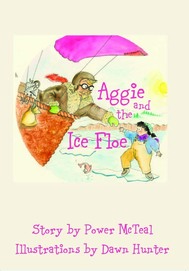
Aggie and the Ice Floe, story by Power McTeal, illustrations by Dawn Hunter
Aggie and the Ice Floe is an adventure story about a young boy called Aggie, whose sleepy world is woken up to a first fall of snow. When Aggie rushes outside to play, he doesn’t expect quite the adventure the snow has brought with it, and the friendship he will form with a balloonist called Brandon, who rescues Aggie as he gets into difficulty playing on a frozen river. Beautifully illustrated by artist Dawn Hunter.
Click here for more details and discount purchase options.
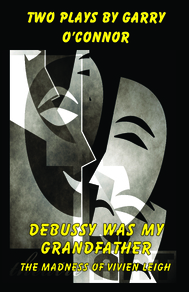
Debussy Was My Grandfather, by Garry O'Connor
Under the one title are brought together two plays by the critically acclaimed Garry O’Connor, Debussy Was My Grandfather and The Madness of Vivien Leigh. A theme common to both is the emotional and psychological turmoil underneath the veil of public careers, with an uncompromising look at the undercurrents: the dysfunction of domestic/family life, in all its anguish and floridity. There’s a nicely judged balance between art in its moments of transcendence, and the reality underpinning it, with a flawed humanity put to the service of art. It’s a theme O’Connor has explored in a substantial body of work as novelist, biographer and playwright…
Praise for The Madness of Vivien Leigh:
‘The mythology of one of the century’s most celebrated marriages…a brilliantly perceptive portrait.’ The Observer
‘With real insight O’Connor gets plausibly close to what made Olivier and wife tick as artists…a penetrating, utterly objective mind at work. Irish Times
‘Compulsive…the pair who were Charles and Di, Torville and Dean, Tragedy and Comedy, Scylla and Charybdis all rolled into one.’ Vogue
Click here for more details and discount purchase options.
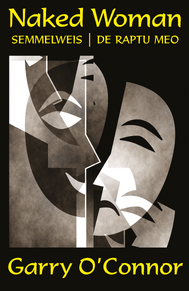
Naked Woman, by Garry O'Connor
Under the one title Naked Woman are brought together two plays by the critically acclaimed Garry O’Connor. The first, Semmelweis, is a victim play in the Tennessee Williams tradition, and the second, De Raptu Meo, is a theatrical re-creation of English poet Geoffrey Chaucer and his times. Semmelweis is from the start in a trap set by his own character and his overriding passion for truth. But his is a story of crushing disappointment, having parallels today, especially in medicine. To see flaws in the system, and to speak out against cover-ups and vested interest, invites pariah status and a ruthless sweeping aside in the relentless drive for conformity and profit.
De Raptu Meo, as Libby Purves pointed out in her review, exposes the relativity of truth we find in contemporary culture, which she has contrasted with events surrounding English poet Geoffrey Chaucer, who faced, in Richard II’s reign, the accusation of rape. Present society is awash with stories of sexual abuse as no other age has been. Here is a take on that subject, with the audience asked to participate in Chaucer’s trial as if the jury, and at the end give a verdict as to whether or not he was guilty of the crime.
Semmelweis was first performed at the Edinburgh Festival, and De Raptu Meo had its first reading in Inner Temple, with Derek Jacobi in the part of Geoffrey Chaucer, and its first full performance in the same venue with Ian Hogg in the lead role.
Click here for more details and discount purchase options.
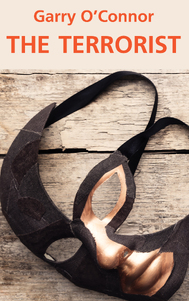
The Terrorist, by Garry O'Connor
The late 1960s. Celebrity playwright Oliver Lindall has assembled his team of players for the premiere of his new play When Winter Comes. For the author, first-night nerves won't be his only obstacle. Among his troupe is Simon Baird, chosen for his acting skills, yet known for his reputation. Baird has brooding class resentments and is as likely to wreak destruction as shine in any new production. When the play finally premieres, we still don't know what it will be: more plaudits for Oliver Lindall, or chaos at the hands of the hugely talented, mercurial Simon Baird? In the climax of O'Connor's The Terrorist we are delivered not only a verdict, but one further question: who actually owns the finished production: the playwright, the players, or the audience played to? Simon Baird has his answer, and demonstrates it graphically.
Click here for more details and discount purchase options.
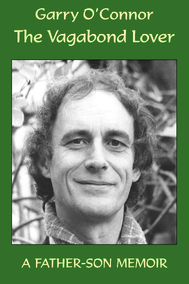
The Vagabond Lover (hbk), by Garry O'Connor
What happens to the Vagabond Lover, the legendary broadcasting and Variety star Cavan OConnor, is a central theme and issue of Garry OConnors autobiographical account of his father and himself up till his father's death in 1997.
Father and son share in this romantic identity, but it fades when facts and times change, and the son struggles to free himself from the darkness as his father's fortunes decline, and the singing star descends into coruscating bitterness and iconoclasm.
Writer O'Connor, known for his biographies, adopts the traditional catharsis by finding feet of clay in other celebrated figures, and by putting his father on the stage. His unsparing quest leads him through both their pasts, his own happy childhood and immersion as a student in the Cambridge mafia theatrical world, to love affairs in Paris, and through his father's near tragic end in Old Time Variety, to a surprising dénouement.
With sometimes sad, sometimes hilarious, and sometimes shocking consequences, this fast-moving, two-pronged search into the nature of celebrity arrives at a profound resolution as the author shrugs off the flaws and setbacks packaged as part of the deal.
Click here for more details and discount purchase options.
The Vagabond Lover (pbk), by Garry O'Connor
Cavan O'Connor was born into near destitution in Nottingham in 1899, but quickly rose to become the legendary Vagabond of Song. He was one of the most famous singing legends of his era. He topped Variety bills. He was an adventurer, who cut a swashbuckling figure. In the golden age of radio, his broadcasts reached listening figures of over thirteen million. With his flawless tenor voice his status was as latter-day troubadour, a star of stage imitated by romantics young and old all over the civilised world. But what lay behind the idealised celebrity? Was he a gift from God, or a flawed, vulnerable being like the rest of us? Enter the writer son Garry O'Connor, who answers that question emphatically. In his memoir The Vagabond Lover, the father-son dispute unveils without sentimentality the general mess of domestic and family life, of which Cavan was the head. Revealed in this searing, honest, dark revelation are the miserable depths the sweet singer of lyrical song plumbed, and remorselessly so. O'Connor fils does not spare the reader, refusing to gloss over the traumas and crises of family conflict, as they run in parallel to his own fortunes and vicissitudes. He is dispassionate with the biographical detail, yet impassioned enough to recall one of his own plays, penned in his Cambridge youth, where the father Cavan is reimagined. In fiction as in life he is cast as the pivotal character in a family drama painful in its climaxes. Overarching is a first ever account of those Cambridge years, peopled with familiar icons of twenty-first-century culture. It's a fast-moving, two-pronged probe into the nature of celebrity, arriving at a profound resolution as the author shrugs off the flaws and setbacks packaged as part of the celebrity deal.
Click here for more details and discount purchase options.